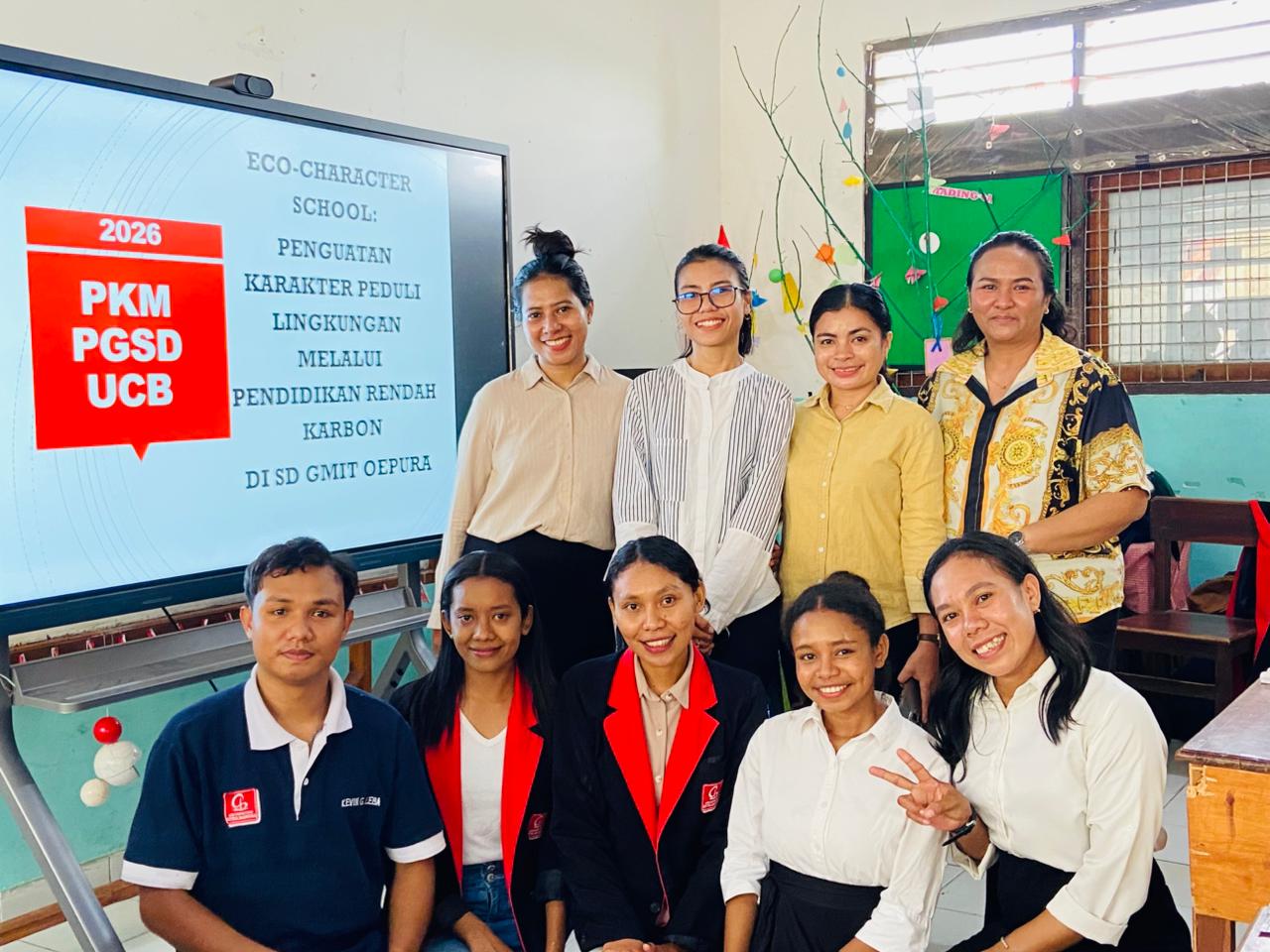
Kupang = = sync, corrected by elderman = = @ elder _ man Citra Bangsa Perform People's Devotion (PKM) program through Eco- Character School - Reinforming Environmental Character Through Carbon Low Education at Oepura GMIT Elementary School KupangMay 12, 2026, 8: 00 am Wita. The events followed 78 students of Class III and V are emphasizing character reinforcement, especially the character value of the environment care as part of 18 nation values in elementary school.
The program is carried out through social and direct practice based on low-carbon education. In social activities, students are introduced to the importance of maintaining the environment, the impact of carbon emissions on human life, as well as the responsibilities of youth in maintaining sustainability.
PGSD Lecturer UCB who is involved in the PKM activities of Yulsy Nitte (Team Leader), Kristina Noya Nahak, Chintya Ati and Hingdhan Hendrik. The PGSD student involved in this PKM is Kevin Leba, Ndeli Elisabet, KaroIina Kutiom, Louisa Bureni and Esther Lelaweb who then took students to apply various environmental habits such as taking out trash in place, reducing disposable plastic use, bringing their own drinking bottles, saving electricity and water, and keeping classes clean and schools clean. Students are also involved in planting and treating plants as a form of a real practice of caring character education.
As part of the evaluation, the PKM team held interactive quizzes to test context understandingtual Students related to the application of character values care about the environment in everyday life. The evaluation results show 100 percent of the students are able to understand and apply environmental care behavior through the answers and practices shown during their activities.
Principal GMIT Oepura Elementary School Kupang, Amelia Kelin's sanci provides an appreciation for the activities. According to him, character education isn't just taught through theory in the classroom, but it needs to be built through a real experience close to student life. He assessed the program to help the school instill the value of responsibility, discipline, and environmental care from an early age.
Teachers also judge the approaches used to improve student participation and awareness. After activities took place, students seemed more disciplined keeping the class clean, more concerned with using plastic waste, and became used to keeping the school environment independent.
Positive response comes from the students. Student representative III said the activity made them understand the importance of keeping environmental hygiene through simple action every day. While representatives of the V-class students claim to be used to carrying their own drinking bottles and reminding their friends not to take out the trash.
Critically, it shows that the implementation of character education in elementary school still faces serious challenges. All this time, strengthening 18 values of the nation's character tends to stop at an administrative and theoretical aspect of learning. Environmental character values are often taught as a concept without any real sustainability.
The Eco-Character School shows that the establishment of the environmental character is more effective when students are directly involved in context activitiestual. Partition approachpatif and nurture proved to be able to build student ecological awareness more deeply than mere talking methods. However, that success still requires the support of school culture, teacher tenacity, and family engagement to keep character value from going on for a moment.
Through this PKM activity, the professor and student of PGSD FKIP UCB hope that environmental character education can be an integrated school culture in everyday life as part of the effort to build a responsible generation for the environment and a sustainable future.
Galeri Foto